
EGG FREEZING & FERTILITY PRESERVATION
EMPOWERING HOPE
Empowering Futures: The Essentials of Egg Freezing and Fertility Preservation
EGG FREEZING & FERTILITY PRESERVATION
Embarking on a transformative journey in assisted reproductive technologies, oocyte cryopreservation, or egg freezing, has evolved since the groundbreaking success of the first reported pregnancy in 1986. While globally recognized for empowering women to extend their reproductive timelines, Nigeria is now navigating its own trajectory, albeit with challenges in achieving higher success rates. The emergence of egg freezing in the country reflects a growing awareness and accessibility, yet success rates remain comparatively low. Bridging this gap necessitates fostering awareness, dispelling myths, and investing in healthcare infrastructure and expertise. Collaborative initiatives involving healthcare professionals, policymakers, and the community are crucial for advancing assisted reproductive technologies in Nigeria. By empowering women with informed choices and aligning with evolving healthcare autonomy, oocyte cryopreservation has the potential to reshape the landscape of fertility options, providing hope for a brighter reproductive future in Nigeria.

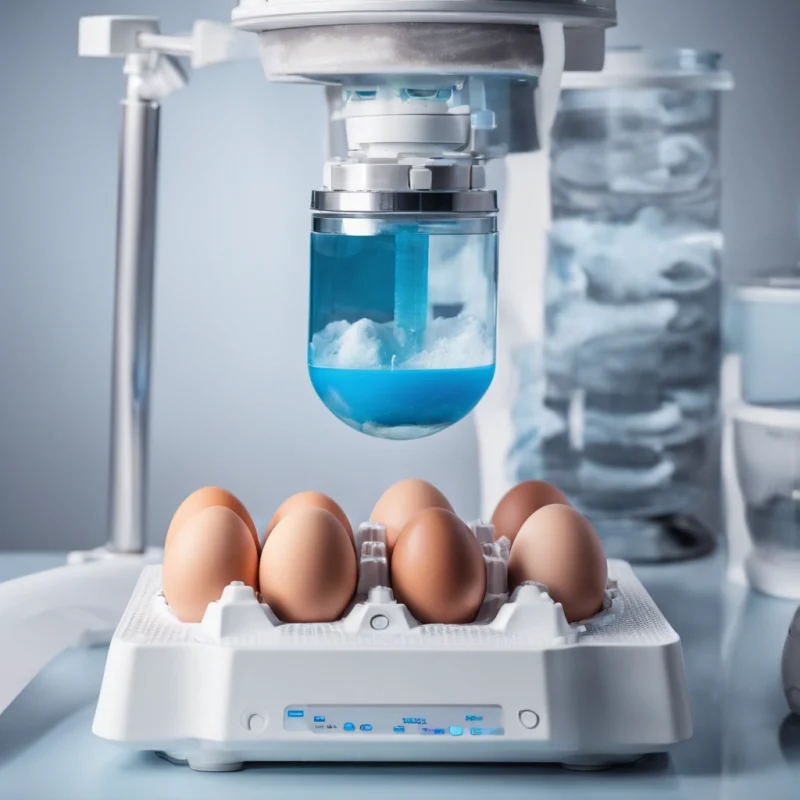
Egg Freezing
Egg freezing stands as a remarkable advancement in reproductive medicine, offering women the empowering choice to safeguard their fertility until the opportune moment arrives to embark on the journey of motherhood. This invaluable option extends its reach to women facing diagnoses of cancer or other illnesses that might compromise their fertility, providing a glimmer of hope during challenging times. Furthermore, egg freezing serves as a proactive strategy for healthy women who, understanding the natural decline in fertility with age, wish to defer pregnancy attempts until a later stage in their lives. This forward-thinking approach aligns with the evolving societal landscape, where women seek greater control over their reproductive destinies.
The process of egg freezing mirrors several key steps in a typical in vitro fertilization (IVF) cycle, involving meticulous care and precision. Commencing with ovulation stimulation, patients undergo thorough ultrasound monitoring to ensure optimal egg development. The subsequent stage involves the delicate procedure of egg retrieval, a pivotal moment in the process. Post-retrieval, the harvested eggs undergo a brief period of cultivation before being expertly frozen on the same day. This cryopreservation technique ensures the preservation of the eggs’ viability, allowing women the flexibility to pursue motherhood when the time is right for them. By seamlessly integrating into the broader spectrum of assisted reproductive technologies, egg freezing not only addresses medical challenges but also caters to the evolving reproductive choices of women in the modern era.
- Sperm Cryopreservation
In the realm of fertility preservation, men facing the prospect of undergoing treatments for cancer or other fertility-compromising diseases find solace in the well-established practice of cryopreserving their sperm. This method, achieved through the straightforward process of masturbation in post-pubescent boys and men, serves as a proactive measure to safeguard their reproductive potential before embarking on treatments that may pose a risk to fertility. This fertility preservation technique not only offers hope to individuals grappling with health challenges but also aligns with the broader narrative of patient-centered care, recognizing the importance of addressing both immediate health concerns and long-term quality of life.
For pre-pubescent boys, facing unique challenges in fertility preservation, alternative methods come into play. Sperm retrieval can be accomplished through testicular aspiration or electrostimulation, presenting viable options to collect and store sperm for future use. As research in this field progresses, scientists are exploring cutting-edge approaches, such as cryopreserving testicular tissue samples. This innovative avenue holds promise for the future, envisioning a scenario where re-implantation of preserved testicular tissue post-treatment could potentially restore fertility, further broadening the scope of fertility preservation methods for males. These advancements underscore the ongoing commitment to tailoring fertility preservation strategies to individual needs and circumstances, offering a ray of hope for those navigating the intersection of health and reproductive choices.
About Sperm Cryopreservation
- Purpose: Sperm cryopreservation, or freezing, is a method used to preserve a man's fertility for future use.
- Common Scenarios: It is often employed by men facing medical treatments (such as cancer therapies) that may impact fertility or those anticipating reproductive delays.
- Procedure: Sperm is obtained through masturbation, a straightforward and non-invasive process for post-pubescent males.
- Alternative Methods for Pre-pubescent Males: For pre-pubescent boys, sperm retrieval can be achieved through testicular aspiration or electrostimulation.
- Versatility: Cryopreserved sperm can be stored for extended periods without significant loss of viability.
- Ease of Use: Sperm can be collected at the individual's convenience, allowing flexibility in preserving fertility without time constraints.
- Thawing Process: When ready for use, the cryopreserved sperm is thawed and can be used in assisted reproductive technologies, such as in vitro fertilization (IVF) or intrauterine insemination (IUI).
- Success Rates: Sperm cryopreservation has high success rates, and thawed sperm can retain its fertilizing capacity comparable to fresh samples.
